Report
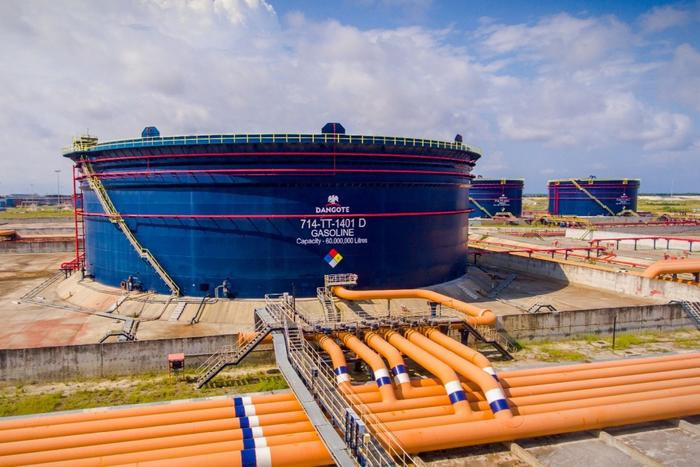
The Dangote Refinery and the Transformation of the West African Energy Landscape
By Peter IjaraJul 12, 2026
The commissioning of the Dangote Refinery marks one of the most significant developments in Africa's energy sector in decades. With a refining capacity of 650,000 barrels per day, it is the largest single-train refinery in the world and has the potential to fundamentally reshape petroleum trade, energy security, industrial development, and regional economic integration across West Africa.
For decades, despite being one of the world's major crude oil-producing regions, West Africa has remained heavily dependent on imported refined petroleum products. This paradox has exposed economies to supply disruptions, foreign exchange pressures, and volatile international prices. The Dangote Refinery presents an opportunity to reverse this long-standing structural weakness.
A Shift from Import Dependency to Regional Self-Sufficiency
Many West African nations — including Ghana, Togo, Benin, Sierra Leone, Liberia, and Guinea — import a substantial proportion of their refined petroleum products from Europe, the Middle East, and Asia.
With the Dangote Refinery operating at optimal capacity, Nigeria is positioned not only to meet domestic demand but also to become the primary supplier of refined petroleum products to neighboring countries.
This shift will:
- Reduce dependence on overseas refineries
- Shorten supply chains
- Improve fuel availability
- Lower transportation costs
- Strengthen regional energy resilience
West Africa could gradually evolve into a more self-sufficient energy market.
Improved Foreign Exchange Stability
Fuel imports have historically consumed billions of dollars annually across West Africa.
As regional countries source refined products closer to home:
- Demand for foreign exchange may decline
- Pressure on local currencies could ease
- Governments may experience improved balance of payments
- Central banks could enjoy greater monetary stability
Nigeria itself stands to conserve significant foreign exchange previously spent importing refined products.
Emergence of Nigeria as a Regional Energy Hub
The Dangote Refinery significantly enhances Nigeria's strategic influence within the African energy market. Nigeria is now positioned to become:
- West Africa's refining center
- A major exporter of aviation fuel, diesel, petrol and marine fuels
- A logistics hub for petroleum distribution
- A pricing reference point for regional fuel markets
This strengthens Nigeria's leadership under the African Continental Free Trade Area (AFCFTA).
Competitive Pressure on Existing Refineries
State-owned and private refineries across West Africa will face increasing competition.
Countries operating small, inefficient refineries may struggle to compete with Dangote's economies of scale. This may trigger:
- Refinery modernization
- Strategic partnerships
- Regional specialization
- Increased private investment
Competition generally benefits consumers through improved efficiency and potentially lower prices.
Industrial Development Beyond Fuel
The refinery is more than a fuel-producing facility. Its integrated petrochemical complex provides feedstock for:
- Fertilizer production
- Plastics manufacturing
- Packaging industries
- Pharmaceutical products
- Chemical manufacturing
Access to competitively priced petrochemical products could stimulate industrialization across West Africa and reduce dependence on imported industrial inputs.
Enhanced Energy Security
Regional fuel shortages have frequently resulted from disruptions in global supply chains.
A major refining center within West Africa reduces exposure to external shocks, geopolitical tensions, shipping delays, and refinery outages abroad. Energy security becomes increasingly regional rather than external.
Opportunities for Logistics and Maritime Services
The increased movement of crude oil into Nigeria and refined products across West Africa creates significant opportunities in:
- Marine transportation
- Storage infrastructure
- Pipelines
- Port services
- Tank farm development
- Petroleum trading
Companies operating in logistics, marine services, and energy infrastructure stand to benefit considerably.
Challenges That Remain
Despite its enormous potential, the refinery alone cannot solve all of West Africa's energy challenges. Several constraints remain:
- Infrastructure Deficit: Poor Road networks, inadequate pipelines, and limited storage capacity continue to hinder efficient product distribution
- Regulatory Barriers: Cross-border customs procedures, taxes, and differing fuel specifications could slow regional trade
- Market Competition: Existing international suppliers may reduce prices aggressively to retain market share
- Domestic Supply Priorities: Nigeria must consistently satisfy domestic demand while honoring export commitments
Strategic Implications for Governments
Governments across West Africa should leverage this development by:
- Harmonizing fuel standards
- Simplifying cross-border petroleum trade
- Investing in transport infrastructure
- Encouraging private investment in storage and logistics
- Promoting regional energy integration through ECOWAS and AFCFTA frameworks
Strategic Implications for Businesses
The refinery creates substantial opportunities for:
- Petroleum traders
- Logistics providers
- Marine operators
- Financial institutions
- Infrastructure investors
- Industrial manufacturers
- Energy technology firms
- Consulting and intelligence companies
Businesses that position themselves early will likely capture significant value from the evolving regional energy ecosystem.
Conclusion: A Paradigm Shift in African Industrialization
The Dangote Refinery represents far more than an impressive feat of civil engineering; it is a profound rewrite of the structural economics of the African energy sector. By internalizing the value addition chain — transforming African crude into high-value products on African soil — it demonstrates that the continent can actively step out of its historical role as a mere supplier of raw materials.
As the facility approaches peak optimization and duplicate projects take root across the continent, the geopolitical center of gravity for African energy is firmly shifting back home.
Success will depend not only on the refinery's operational efficiency but also on the ability of governments, regulators, financial institutions, and private sector participants to build the supporting infrastructure and policy environment necessary for a truly integrated regional energy market. For strategic investors, policymakers, and industry leaders, the emergence of the Dangote Refinery signals the beginning of a new era — one in which West Africa has the opportunity to transition from being primarily an exporter of crude oil to becoming a globally competitive center for energy value addition and industrial growth.